I build furniture for a living, and the question I get asked the most — at art fairs, in my inbox, standing in my studio while someone runs a hand across a drawer front — is some version of “is this actually quality mid-century modern furniture?” Sometimes that question is really a question about the price of the piece. They’re fair questions. Most MCM furniture sold today has the silhouette right: clean lines, tapered legs, a low-slung profile. But that’s the easy part. What separates a piece that lasts fifty years from one that’s headed to the curb in two comes down to a few things: what it’s made of, who made it and how it’s put together.
Whether a person asks about the quality or the price, they’re asking the same thing. Is it worth it?

Start With the Wood: Solid & Hardwood Ply vs. Veneer Over Composite
Wood is the first thing I’d check, and it tells you more than almost anything else about how a piece is going to hold up. But “solid wood” isn’t quite the whole story. The real dividing line is between quality wood and cheap wood. Quality wood means solid lumber or real multi-layer hardwood plywood like Baltic birch, topped with a thick, actual wood face. Cheap wood means MDF, particleboard and a paper-thin veneer glued over composite. It’s compressed wood fiber and glue, dressed up to look like the real thing. And some manufacturers are even using thick corrugated cardboard for the core these days. I won’t name names.
Most mass-market retailers default to the cheap version because it’s less expensive to produce at scale, and therefore less expensive for the customer on the showroom floor. You can often tell the difference without any tools: look at a drilled hole, a chipped corner or any exposed edge. Solid wood and real plywood show consistent grain all the way through, while MDF and particleboard show a flat, sawdust-colored core, sometimes with a faint chemical smell from the resin holding it together.
The problem with cheap wood shows up later. It doesn’t hold screws as well as it ages: drawer slides and hinges start pulling loose from a side panel that’s basically compressed sawdust. It can’t be sanded down and refinished. And it wears in ways that are hard to hide, such as chipped edges or a face that starts to peel at the corners. Plus, it’s often pretty obvious that what you have isn’t real.
Quality Wood: Solid Lumber & Hardwood Plywood
- Holds joinery and hardware securely for decades
- Can be sanded, refinished, or touched up instead of replaced
- Deepens in color and grain character with age
- Weighs more than you might expect
Cheap Wood: MDF, Particleboard & Veneer-Over-Composite
- Loosens around screws and hardware fast
- Can’t be refinished: damage is permanent
- Swells, chips, or delaminates at the edges
- Often lighter than it looks, because there’s less real wood in it
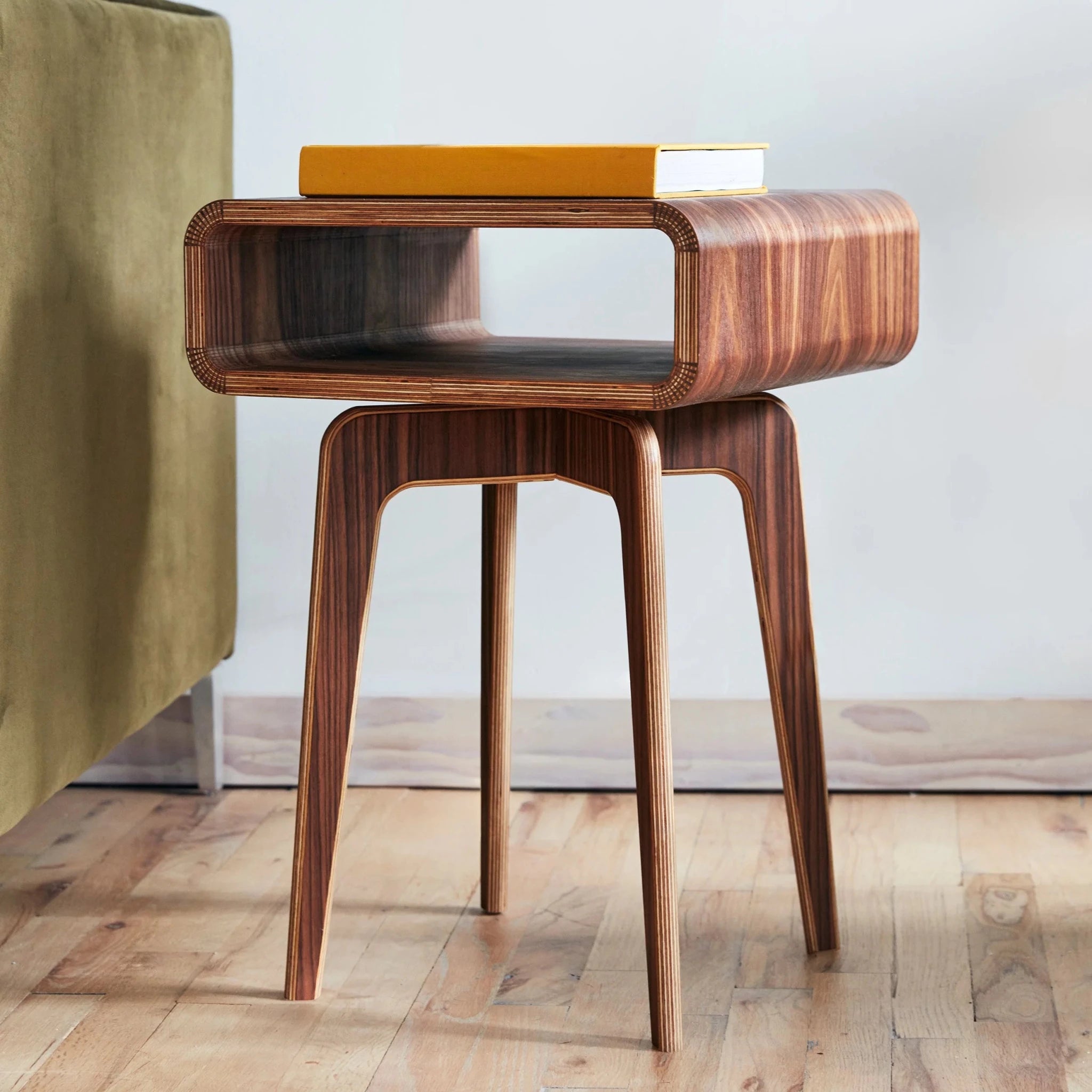
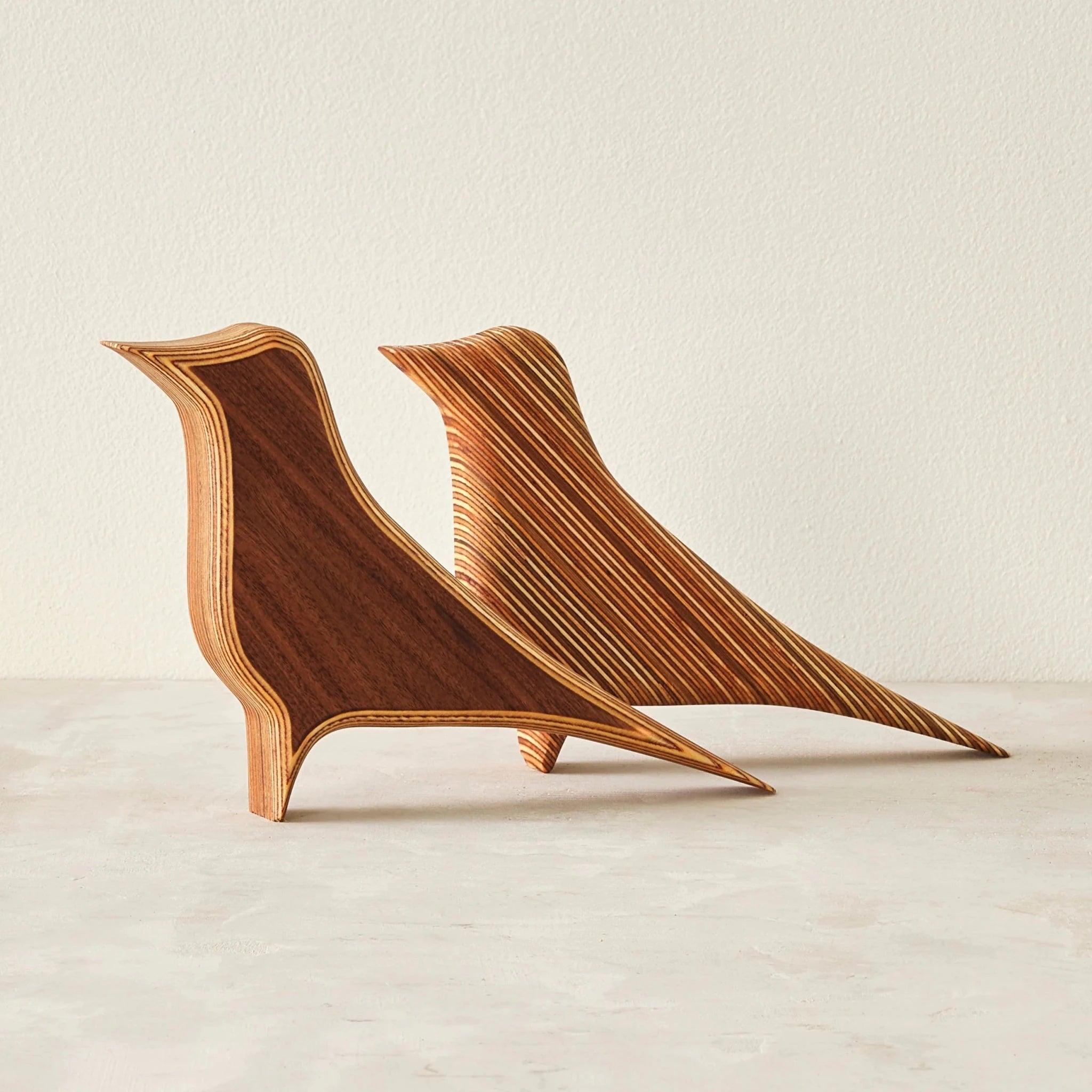
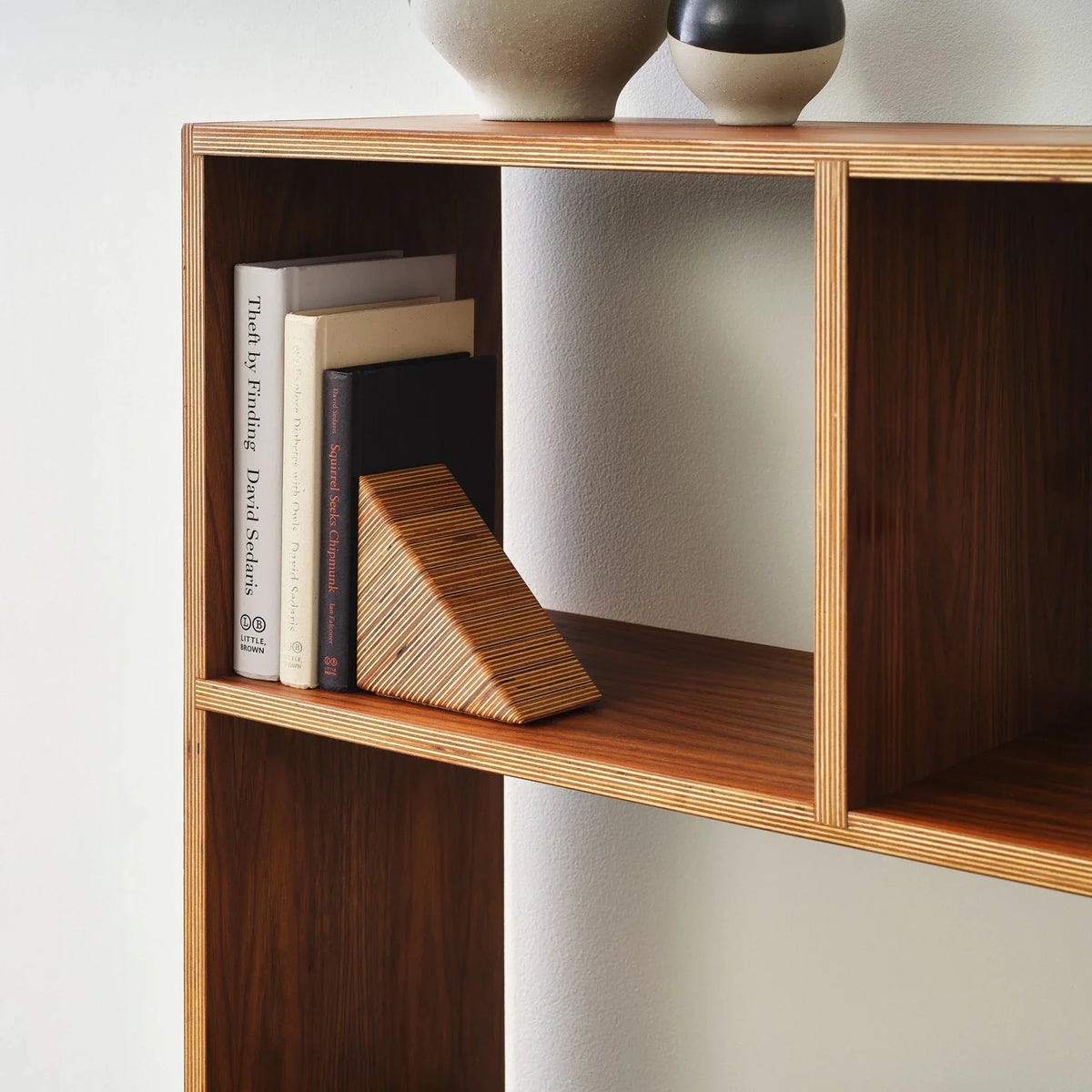
Most of what I build uses a 13-layer Baltic birch topped with a solid walnut or maple face. It’s the same category of material used in some of the most well-known mid-century designs. Eames worked with something similar, and I use it because it holds up to daily life without the seasonal dimensional changes solid wood goes through, and because I like the uniqueness of it compared to a lot of solid wood pieces. Baltic birch isn’t the compressed sawdust used at the mass-market price point, and it sands and refinishes the same way solid wood does. What actually separates the two isn’t the word “solid.” It’s the number of real wood layers and the quality of what’s holding them together. You can see it up close in the furniture collection, or read more on what actually defines mid-century modern design if you’re newer to the style.

Made to Order vs. Warehouse Stock: What the Wait Time Is Actually Telling You
Instead of looking at lead time as an inconvenience (“I have to wait how long?”), think of lead time as a signal. I get it. I’ve scoffed at long lead times too, but I always try to remind myself what it really means. Finding a great piece of furniture and seeing a six-to-eight week wait is not a red flag. It’s the opposite. A piece that ships in two days came off a shelf somewhere and was made in a batch built to hit a price point at volume. And it’s often built by an anonymous person with no skin in the game. A piece with a real lead time was built after you ordered it, to spec, by an actual person — not pulled out of a warehouse. No overproduction, no cost-cutting to make the math work at scale.
When you’re spending real money on furniture, that’s worth something. A made to order piece is built for the person who ordered it, not picked from a bin.

How to Spot Quality Construction
A few things to check before buying, whether you’re standing in front of the piece or reading a product description online:
- Joinery: Dovetail, dado, rabbet and mortise-and-tenon joints hold up far longer than staples or dowels. Pull open a drawer and look at the corners; you’ll usually be able to see which one you’re getting.
- Weight: Quality wood, solid or real hardwood plywood, is heavier than it looks. If a piece feels surprisingly light for its size, something was substituted for a cheaper core.
- Finish: A good finish feels smooth and even under your hand, not rough or tacky. Visible brush marks or drips mean a rushed process. A product that requires maintenance on the finish is also a sign of something good, believe it or not. It usually means you’re looking at real wood that ages and needs care over time, not a sealed plastic veneer that never will.
- Leg attachment: Legs should be bolted or doweled into a solid frame, not screwed straight into particleboard. Give a leg a gentle wiggle if you can; there shouldn’t be any play.
- Transparency: A maker who stands behind their work can tell you exactly what wood species was used and how the piece was built, without looking it up. If that information isn’t available, that’s the answer.
- Assembly: This one is pretty obvious, but if you’re building the piece yourself after you get it home, it’s not meant to last a lifetime.
One more, if you can get close enough: smell it. Fresh particleboard and MDF often carry a faint chemical odor from the resin used to bind them. Real wood doesn’t. My products are finished with oil and wax. When you smell it, you’ll notice a rich, earthy tone with a hint of citrus and beeswax.
All of these quality indicators point to the same thing: not what you’re paying now, but what happens with the piece next.

Why It Matters: The Cost-Per-Year Argument
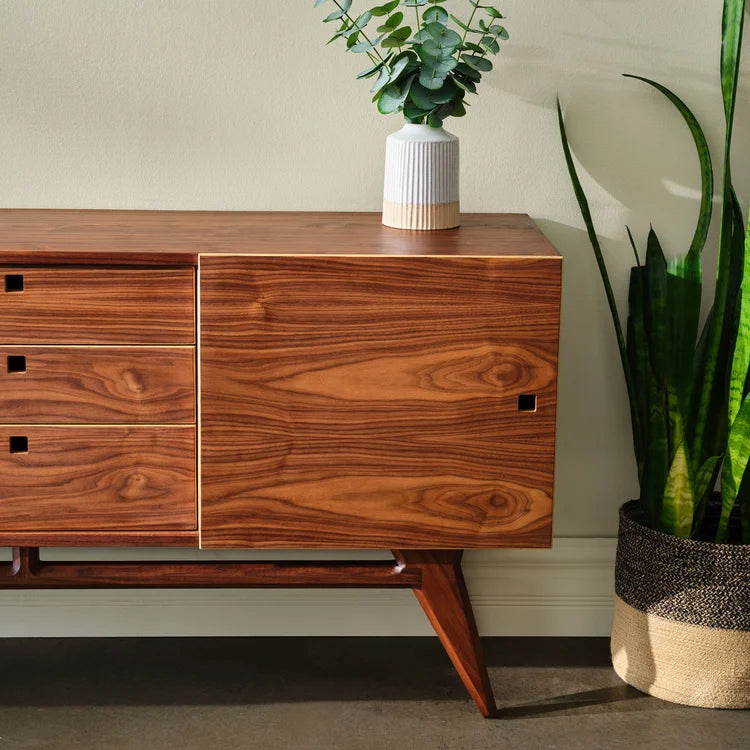
Here’s the simplest way to think about it: a $300 piece that needs replacing in three years costs more per year than a $900 piece that lasts fifteen. Quality furniture isn’t really about spending more. It’s about not paying twice. A well-built piece, like the sideboard I build, is designed to be repaired and refinished rather than replaced — that’s the whole idea behind heirloom furniture. The materials, a single pair of hands doing the work, the finishing process: none of it is about being the cheapest option. It’s about being the last piece you’ll ever need.
Looking for a piece you won’t need to replace? Start here. Every piece I build is made to hold up, made to order and made to outlast whatever trend it came in on.
Once you know what to look for, the fun part is figuring out how to actually use it — here’s a room-by-room guide to decorating with it.
— Justin, Relic Modern
Frequently Asked Questions, or TL/DR
- How can you tell if furniture is good quality? Check the wood (solid lumber or real hardwood plywood, not MDF or particleboard), the joinery (dovetail, dado, rabbet or mortise-and-tenon, not staples), how the legs attach and whether the maker can tell you exactly what it’s made of and how it was built.
- Is solid wood always better than engineered wood? Not necessarily. Cheap engineered wood like MDF and particleboard is the real problem. Genuine multi-layer hardwood plywood, like Baltic birch, often outperforms solid wood in pieces that need to resist seasonal swelling and shrinking, like dressers and other case goods.
- Is a long lead time a red flag? Definitely not. It means that the piece you are buying hasn’t been made yet. Someone will actually be building it for you. Furniture that ships fast is often fast-furniture. Just like fast fashion, it’s meant to be temporary. Furniture that has a lead time, whether it’s 6 or 16 weeks, is slow-furniture and meant to last a lifetime.
- Is handmade furniture worth it compared to mass-produced? If it’s actually well-made, yes. You’re paying for materials and joinery that can be repaired and refinished for decades instead of replaced every few years, which tends to even out the cost over time.
- How long should mid-century modern furniture last? Well-built solid wood or hardwood plywood furniture should last decades and often gets passed down. If a piece is falling apart within a few years, the materials or construction were likely cut somewhere to hit a price point.